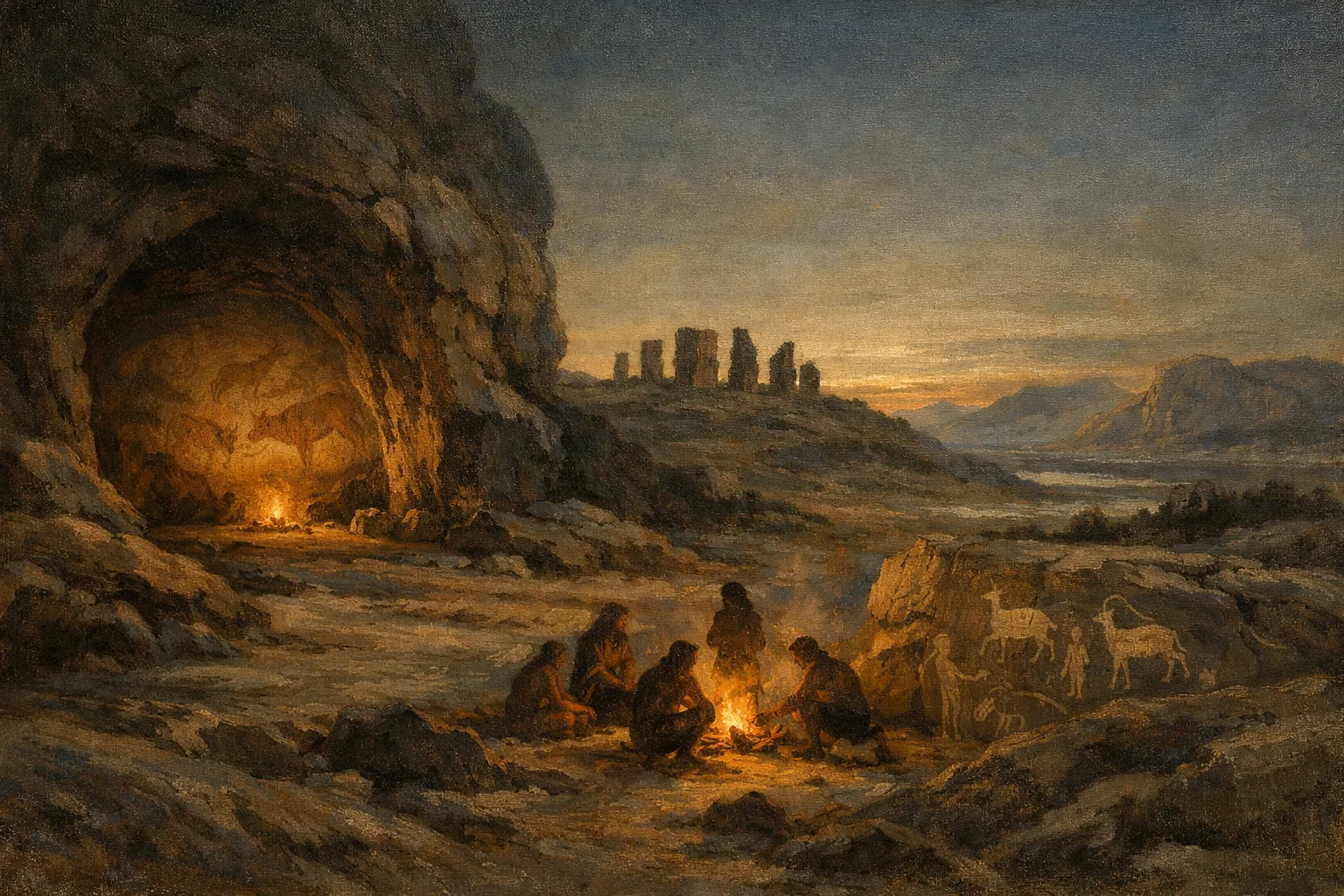
Forms of Art in Prehistory
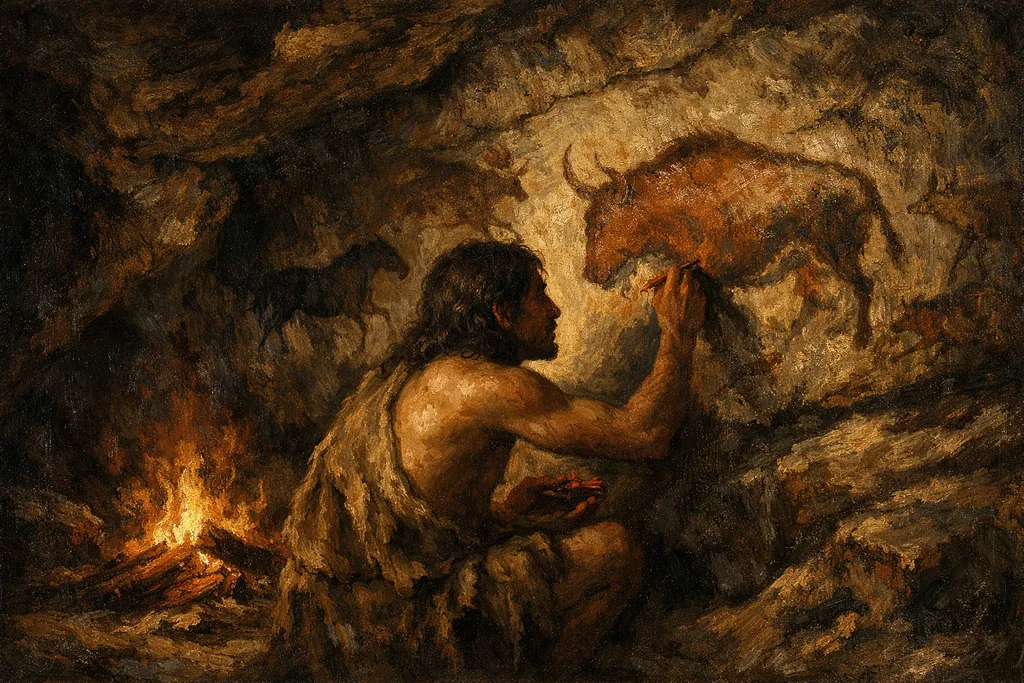
Parietal Art (Rock Wall Art)
Definition
Art created directly on rock surfaces: caves, rock shelters, cliffs.
Techniques
- Natural pigments: red/yellow ochre, charcoal, manganese.
- Mixed with animal fat, water, or saliva.
- Applied with fingers or rudimentary brushes (hair, plant fibers).
- Blow-painting using stencils (negative handprints).
- Engraving by incision or scraping.
Recurring Themes
- Animals (bison, horses, mammoths, lions, rhinoceroses).
- Hunting scenes.
- Abstract signs (dots, lines, geometric symbols).
- Handprints.
Possible Interpretations
- Magical function (ensuring successful hunts).
- Shamanic rituals.
- Mythological transmission.
- Territorial marking.
Importance
It represents the first major manifestation of a shared collective imagination.
The cave becomes a sacred space.
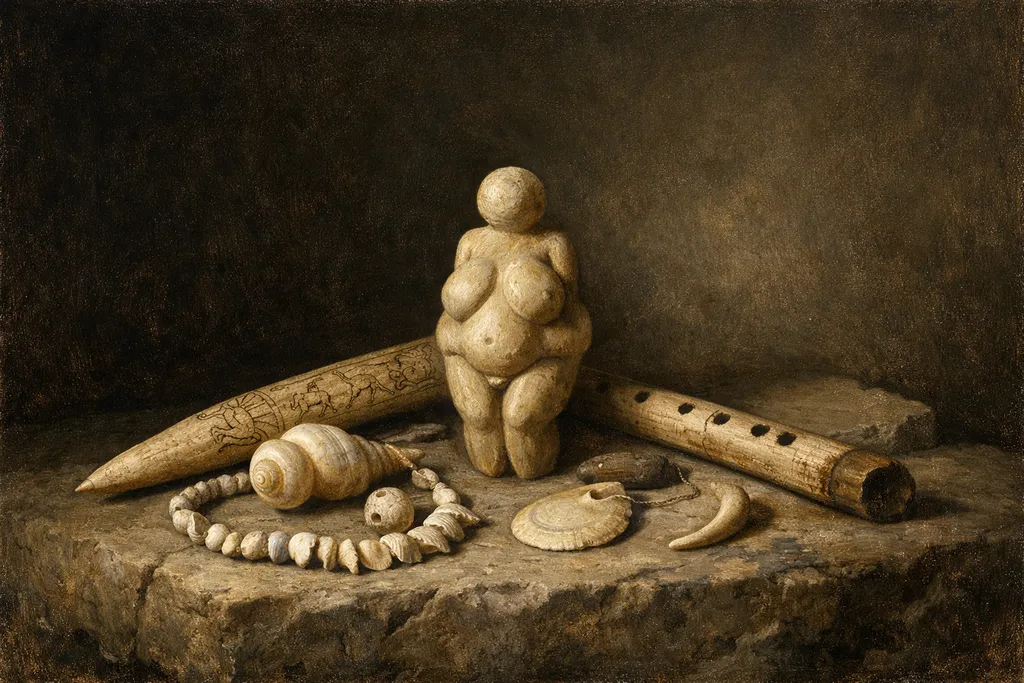
Portable Art (Movable Objects)
Definition
Decorated or sculpted objects that could be transported.
Materials
- Bone
- Ivory
- Reindeer antler
- Soft stone
Main Types
- Female figurines known as “Venuses” (emphasizing fertility-related features).
- Miniature animals.
- Engraved tools.
- Musical instruments (bone flutes).
Interpretations
- Fertility symbols.
- Ritual objects.
- Social identity markers.
- Portable cultural transmission.
Importance
This marks the transition from immobile monumentality to intimate symbolism.
Art enters the personal sphere.
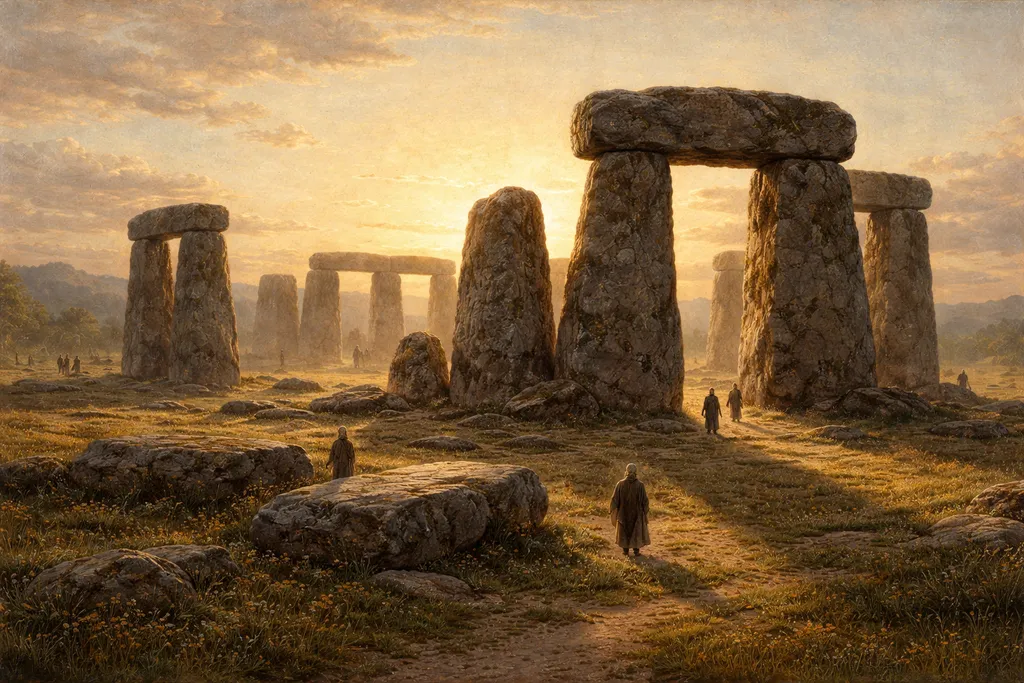
Megalithic Architecture
Definition
Monumental constructions made of large standing stones.
Main Forms
- Menhirs (isolated upright stones).
- Dolmens (funerary structures).
- Cromlechs (stone circles).
- Monumental alignments.
Technical Characteristics
- Transport of multi-ton stone blocks.
- Collective organization.
- Probable astronomical knowledge (solstices).
Functions
- Funerary sites.
- Solar/lunar observatories.
- Ceremonial centers.
- Lasting territorial markers.
Importance
The first durable monumentality.
Humanity inscribes its memory into the landscape.
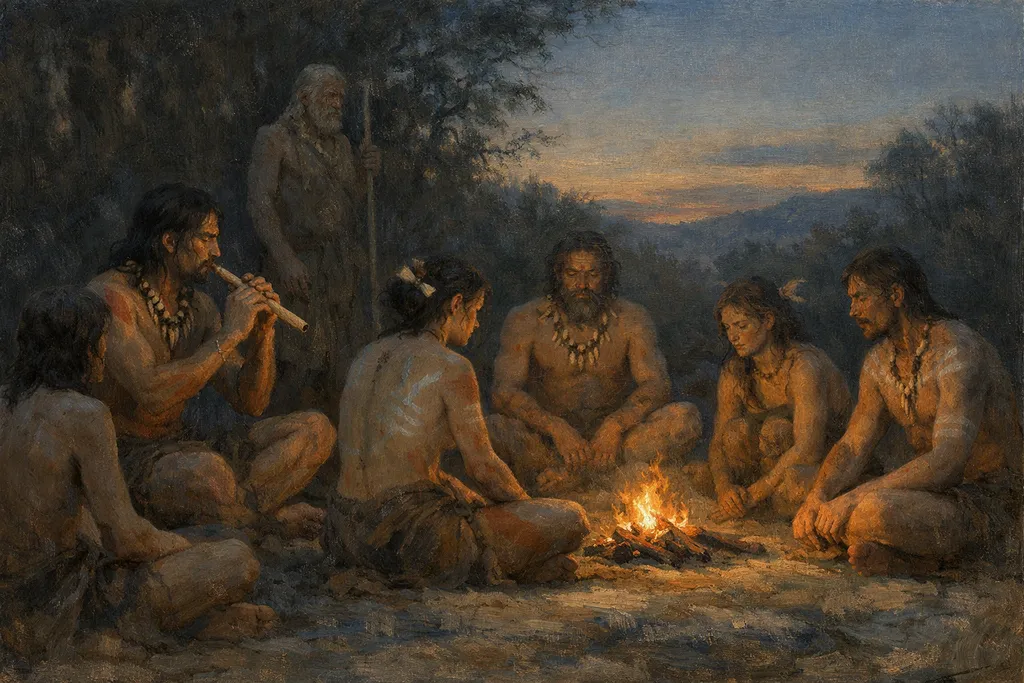
Body and Sound Art
Body Art
Practices
- Body painting with ochre.
- Scarification.
- Adornments (shells, teeth, bones).
- Hairstyles and ornaments.
Functions
- Group identity.
- Social status.
- Initiatory rituals.
- Aesthetics and seduction.
Sound Art
Known Instruments
- Bone flutes (over 35,000 years old).
- Primitive percussion.
- Sound-producing objects (shells, stones).
Functions
- Social cohesion.
- Spiritual rituals.
- Dance accompaniment.
Importance
Art becomes collective performance.
It is no longer limited to images: it engages both body and sound.
Cross-cutting Perspective
Three major evolutions can be observed:
- Birth of the symbol.
- Individualization of artistic gesture.
- Monumentalization of memory.
Prehistory is not primitive in a reductive sense:
it is foundational.